I read this article on MoneySmart that talks about the 5 things young Singaporeans waste money on without realising it ( http://blog.moneysmart.sg/lifestyle/5-things-young-singaporeans-waste-lots-of-money-on-without-realising-it/ ) . While I was glad I didn't fall for any of those 5 things, it made me think about my own relationship with consumerism.
consumerism
noun
1. a modern movement for the protection of the consumer against useless, inferior, or dangerous products, misleading advertising, unfair pricing, etc.
2. the concept that an ever-expanding consumption of goods is advantageous to the economy.
3. the fact or practice of an increasing consumption of goods: a critic of American consumerism.
Point 3 is the one I am referring to. I have to admit that when I was younger, I tended to buy, buy, buy and had poor spending habits. Growing up as a child in a family that was relatively well to do, I didn't fully understand what it meant to struggle for money until my parents got a divorce when I was in my teens. Even then, the bad habits played a big part in how I participate in the consumerism lifestyle. From expensive meals, weekly partying to binge online shopping and unused gym membership, I lived and breathed the entire consumerism culture. It was only in recent years that I stopped doing so.
A big part of this stems from my preference of living a life of where I get to dictate how I spend my time vs living a life where money dictates how I spend 33% of my day. So the first step to doing this was minimising the amount of power money has over me.
This means packing food to work for breakfast and sometimes lunch. Bringing a water bottle instead of buying drinks. Not having a car, taking less taxis and being more disciplined in taking the bus and MRT. I also focus on essential pieces for my wardrobe, planning meals so we can strategise how to buy groceries and selecting schools and activities for Zoey that are within a reasonable cost. It also means no fancy new gadgets and upgrading my phone only when I have been forced to retire the old one - e.g I had to get my Asus ZenFone 6 when my Samsung Note 2's motherboard died in December last year. My tablet is from 2011 and considered so old in tech terms that Samsung doesn't even carry its spare parts in their service centre anymore.
Consuming less things has made me appreciative of what I already have. It has given me the choice to choose what I do for money instead of having to sucked into a corporate job. It's given me the opportunity to work with meaningful businesses and in fulfilling roles.
So how did I make the shift from shopaholic spendthrift to conscious consumer? Here are 5 strategies I use -
1) Get rid of temptations - I unsubscribed myself from emails list of shopping websites. Since I no longer receive those "Free Shipping, 30% off this weekend" emails, I am no longer tempted to shop whenever I see a "good sale" going on. Because I don't see them anymore!
2) Sitting on big purchases - Whenever I want to make a big purchase (for me this is anything above $50), I don't allow myself to buy it immediately. I think about it for at least 14 days, a month if possible. If I find myself going back to it and wanting to get it even after a long time, then I will buy it. If not, it gets forgotten and the money remains in my bank account.
3) One In, One Out - Part of my decluttering exercise is making sure that I don't buy things without getting rid of something existing. So now whenever I want to buy something new, something existing has to go. I'm constantly picking up things and putting them into my "for sale" corner. This makes me wary of buying something new because I would need to get rid of something old.
4) Budgeting - One of the best money saving strategies has to be budgeting. We now have an envelope of money that we put aside for groceries every month. In the past we would just give Siti money whenever she asked for it. What happened would be we sometimes found ourselves spending $800 or even $1,000 a month on groceries because she would buy some expensive items such as fish too often. $50 could be gone every 2 days. Now we have a meal plan and also a grocery budget of $500/month. This makes it easier to control how much we spend on food. On top of that, we also limit eating out at nice places to twice a month.
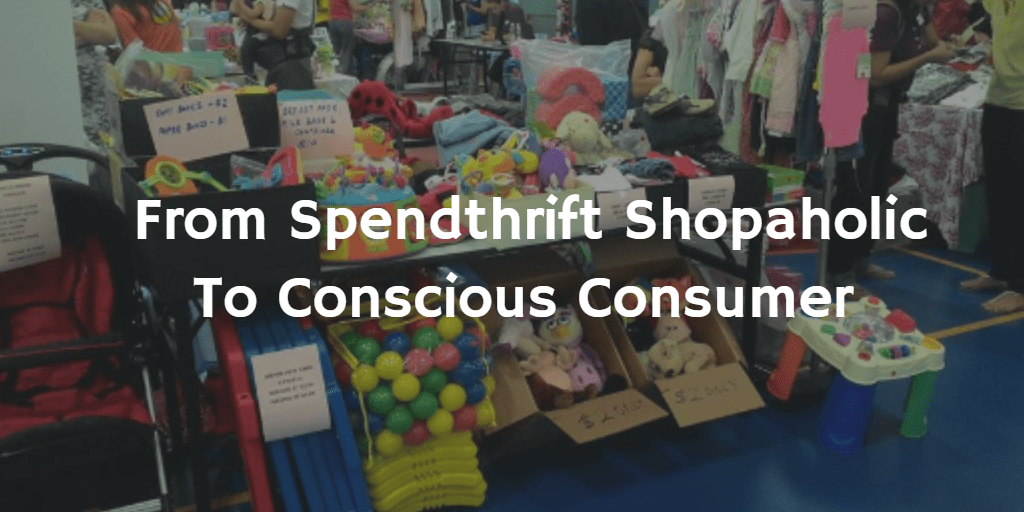
5) Buying & Selling preloved - I've previously written about how I buy and sell lots of kids books and toys preloved ( http://olivia.thechiongs.com/2015/03/04/high-tech-mums-low-tech-kid/ ) . I've also done this for other stuff as well. I bought my tablet and laptop secondhand. Most of the furniture in our home is secondhand as well. The cost is normally 50% or less of and it helps to reduce wastage. At the same time, when I am done with an item, I can sell it and get some money back from there. I joined the Stork's Nest Singapore ( https://www.facebook.com/groups/StorksNestSingapore/ ) sale this weekend and made about $400 from selling old clothes, toys and equipment. It also meant I didn't actually have time to shop, so I didn't buy anything even though I was at the sale. Hehe!
Do you have any strategies for being a conscious consumer you can share?